
How Long Do Dental Implants Last? A Realistic Guide for Irvine Patients
Investing in permanent new teeth is a major milestone, but nobody wants to spend thousands of dollars on a treatment only to repeat the process a decade later. If you are exploring tooth replacement options, your number one question is almost certainly: How long will this investment actually last?
Dental implants are designed to be a permanent solution for tooth loss, frequently lasting 25 years to a lifetime. While the titanium post surgically integrated into the jawbone can last indefinitely with proper care, the visible porcelain crown attached to it typically requires replacement or maintenance every 10 to 15 years due to normal wear.
The truth is that dental implant longevity isn't determined by a random roll of the dice. It comes down to clean engineering, clinical expertise, and how you care for your teeth after the numbing wears off. Let's look at what determines the actual lifespan of an implant and how you can protect your smile for the long haul.
Key Takeaways
- The underlying titanium post can easily last a lifetime because it fuses directly with your living jawbone.
- The visible ceramic crown bears the brunt of everyday chewing and may require replacement after 10–15 years.
- Peri-implantitis (gum infection around the fixture) is the absolute number one cause of early implant failure.
- Choosing an advanced dental implant specialist in Irvine who utilizes 3D bone mapping drastically cuts down your long-term risk of structural failure.
The Science Behind Dental Implant Longevity
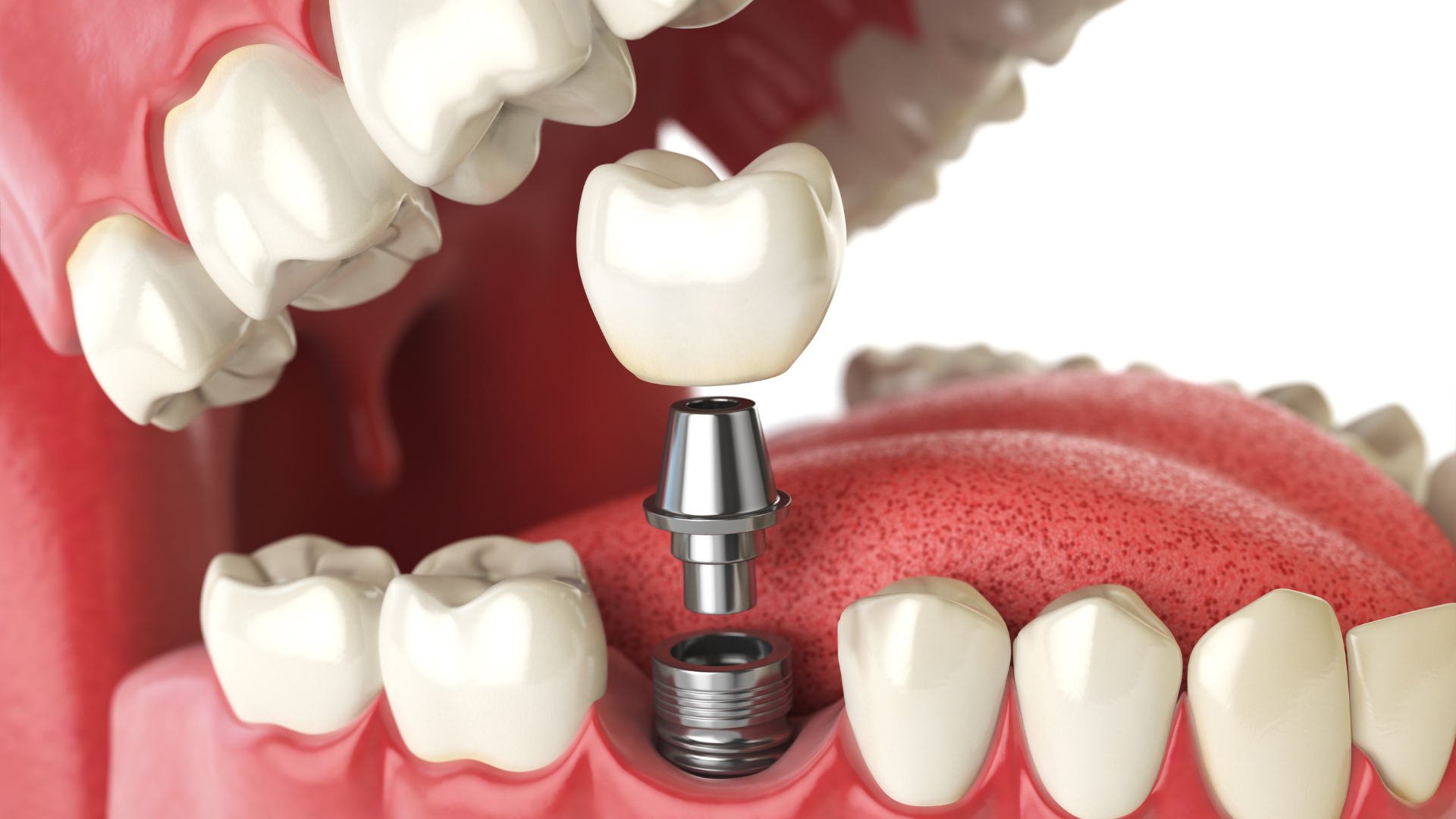
To understand why implants outlast traditional options like bridges or dentures, you have to look at how they interact with your anatomy. Unlike a dental bridge, which must rely on adjacent teeth for physical support, an implant replicates the entire organic structure of a missing natural tooth from root to crown.
During a minor surgical procedure, a doctor places a biocompatible titanium post directly into your jawbone. Over the next few months, a remarkable biological phenomenon known as osseointegration occurs: your living bone tissue attaches itself right to the microscopic ridges of the metal surface. This process creates a permanent foundational bond that human anatomy does not reject.
Clinical research compiled by the Mayo Clinic establishes that modern dental implants maintain a structural success rate over 95% when treatment plans account for individual systemic health factors. Because the post fuses permanently with the jawbone, it acts like a real tooth root. It prevents the bone degradation that naturally occurs when teeth are missing, keeping your jaw strong and your facial structure intact for decades.
The Implant Longevity Process
- Phase 1: Titanium Post Placement — Meticulous surgical insertion into the optimal position within the jawbone.
- Phase 2: Bio-Fusion (3–6 Months) — Living bone cells actively attach to and integrate with the biocompatible post.
- Phase 3: Permanent Foundation — A fully stable, rock-solid base ready to support the beautiful porcelain crown for life.
Threats to Your Investment: Why Implants Fail
Even though the success rate is incredibly high, implants are not magical or bulletproof. They function in a moist, bacteria-filled environment and take a heavy beating every time you chew steak or crunch down on an apple.
The primary threats to an implant include:
- Peri-Implantitis: This is a localized, bacteria-driven infection that settles into the soft tissues surrounding the titanium post. Think of it as a specialized form of aggressive gum disease. When plaque accumulates at the gumline, it triggers chronic inflammation that slowly eats away at the supporting bone. Once the bone disappears, the post loses its grip, starts to wiggle, and eventually fails.
- Bruxism (Teeth Grinding): If you unconsciously clench or grind your teeth at night, you generate hundreds of pounds of continuous force. While natural teeth possess a tiny cushion called the periodontal ligament to absorb shock, implants connect directly to the bone. Unchecked grinding can fracture the internal screw, crack the porcelain crown, or loosen the entire fixture.
- Substandard Subsurface Alignment: If a clinic rushes through the surgical phase without proper imaging, they might place the post at an incorrect angle. This poor alignment forces the implant to take an uneven distribution of weight every time your teeth touch, causing early mechanical failure.
Simple Habits to Maximize Your Implant's Lifespan
Taking care of an implant doesn't require complex chemical regimens or hours of maintenance, but it does demand consistency. You have to treat your new teeth with the exact same respect—if not more—as your natural ones.
Upgrade Your Oral Hygiene Blueprint
Plaque doesn't care if a tooth is real or made of porcelain. It will collect on any surface available. You need to brush twice a day with a soft-bristled toothbrush and a low-abrasive paste. Standard whitening toothpastes can scratch porcelain over time, making it easier for stains and bacteria to stick. Daily flossing is non-negotiable; many implant patients find that a specialized water flosser makes cleaning around the base of the crown incredibly easy.
Wear a Guard If You Grind
If you wake up with a sore jaw or tight facial muscles, you are likely clenching your teeth while you sleep. Partnering with an expert cosmetic dentist in Irvine to design a slim, custom night guard acts as an insurance policy for your smile. The clear acrylic barrier absorbs the nightly pressure, shielding both your natural teeth and your restorative work from structural fatigue.
| Maintenance Habit | What It Protects | Recommended Frequency |
|---|---|---|
| Low-Abrasive Brushing | Crown Glaze & Soft Tissues | Twice Daily |
| Interdental Flossing | Sub-gumline Bacterial Seals | Once Daily |
| Custom Night Guard | Biomechanical Internal Screw | Every Night |
| Clinical Maintenance | Bone Density & Integrity | Every 6 Months |
When Do Dental Implants Need Attention?
If an implant experiences an issue, your body will let you know. Early detection is the difference between a simple, low-cost adjustment and needing to replace the entire fixture.
Keep a close eye out for these clear warning signs:
- The Phantom Wiggle: A healthy implant should feel like an unyielding part of your skull. If you feel even a microscopic shift when you press your tongue against it, something is wrong.
- Exposed Dark Metal: Gums should wrap tightly around the base of your crown. If the tissue recedes and reveals the silver metal of the post or abutment, bacteria are likely attacking the bone underneath.
- Deep, Dull Aches: While the implant itself has no nerves, the surrounding bone and gum tissue certainly do. Persistent pain when you bite down indicates inflammation or an unbalanced bite distribution.
If an implant fails due to severe bone loss or a fracture, the old fixture must be carefully removed. The area is cleaned out, treated with an antibacterial wash, and allowed to heal. Often, a target bone graft is placed to rebuild the socket, creating a strong foundation before a brand-new implant can be safely reintroduced.
Meet Dr. Nova Li | Your Irvine Dental Implant Specialist
The success of your implant journey heavily relies on the hands performing the surgery. Cutting corners by visiting a corporate chain clinic often means dealing with rushed diagnostics and standard, one-size-fits-all components.
At Nova Dental Studio, located at 113 Waterworks Way (92618), we approach implantology through a lens of strict biomechanical precision and long-term health. Dr. Nova Li, DDS, is a highly trained, dual-licensed practitioner who completed comprehensive postgraduate training at the world-renowned Kois Center.
Our Advanced Treatment Protocol
- Step 1: Advanced Vatech GreenX 3D Scan — High-resolution digital mapping captures your precise bone volume, density, and anatomical landmarks.
- Step 2: Flawless Computer-Guided Alignment — Custom pre-surgical positioning eliminates human error and guarantees optimal implant depth and angle.
- Step 3: Lifetime Restorative Safety — A perfectly integrated titanium root designed to evenly absorb chewing force and protect your surrounding bone for decades.
Dr. Li doesn't guess where your implant should go. Our Irvine practice uses advanced
Vatech
GreenX 3D imaging to assess your bone density and nerve pathways before making a single incision. By mapping your bite out with precision technology, we eliminate human error, protect your oral health, and give your new smile the best possible foundation to last a lifetime.
Frequently Asked Questions
Can dental implants get cavities?
No, the materials used in dental implants—titanium and porcelain—are completely immune to tooth decay. However, the living bone and gum tissue surrounding the implant can still develop infections. If plaque builds up, it can lead to peri-implantitis, which can destroy the bone supporting the implant and cause it to fail.
Does getting a dental implant hurt?
The surgical placement is performed under local anesthesia, meaning you will not feel pain during the procedure. Most patients report that recovery is much easier than after a standard tooth extraction. Any mild post-operative soreness over the next few days is typically managed with basic over-the-counter anti-inflammatories.
Will my insurance cover dental implants in Irvine?
Coverage varies widely depending on your specific policy. Many modern insurance providers cover a portion of the restoration phase (the crown), even if they do not cover the surgical placement of the titanium post. Our team at Nova Dental Studio works directly with your insurance company to maximize your benefits and maximize out-of-pocket transparency.
Is there an age limit for getting dental implants?
There is no upper age limit for dental implants, provided you are in good general health and possess sufficient bone density to support the fixture. However, implants cannot be placed in young patients whose jawbones are still actively growing, which typically means waiting until late teenage years or early adulthood.
Want to secure a permanent smile that stands the test of time?
Visit Nova Dental Studio online to explore our advanced restorative options, or call our Irvine office at 949-785-5640 to schedule your comprehensive 3D digital implant consultation today.
Disclaimer:
Dental implant surgery is a surgical procedure. Results vary based on individual bone density, systemic health, and lifestyle factors. A comprehensive evaluation by Dr. Nova Li is required to determine candidacy.